Description
Healthcare facilities need a dependable supply of medical essentials to support daily activities. From protective equipment to cleaning materials and routine medical supplies, every item needs to be stored, tracked, and replenished appropriately. When stock is poorly managed, facilities may experience unnecessary waste, disorganized storage, and unexpected shortages.
A well-planned inventory process helps healthcare teams understand what is available, what is being used, and what needs attention. With consistent procedures, organizations can make better purchasing decisions and manage supplies more responsibly.
Understanding the Causes of Medical Supply Waste
Medical supply waste can happen for several reasons. Facilities may order more products than they need, overlook expiration dates, or lose track of supplies stored in different locations. Changes in demand can also make purchasing decisions difficult.
Without accurate records, staff may not know whether an item is already available or needs to be reordered. This can lead to duplicate purchases and unnecessary stock accumulation.
Identifying the main causes of waste helps healthcare organizations develop more effective inventory practices.
Keep Inventory Records Up to Date
Accurate records are an important part of effective healthcare inventory management. Facilities should record incoming deliveries, supply usage, transfers, and adjustments consistently.
Regular updates make it easier to compare recorded quantities with the stock physically available. When discrepancies appear, teams can investigate them and correct the records before they create larger problems.
A clear inventory record also helps staff make purchasing decisions based on actual requirements rather than assumptions.
Use Expiration Dates to Guide Stock Rotation
Medical supplies with expiration dates require careful monitoring. If older stock remains unused while newer deliveries are placed in front, products may expire before they are needed.
A first-expiry, first-out approach can help: where appropriate, supplies with the nearest expiration dates should be used first. Staff should inspect storage areas regularly and follow product-specific storage and handling instructions.
Facilities should also establish procedures for identifying expired or damaged products so they are not accidentally used.
Match Purchasing to Actual Demand
Buying supplies in large quantities may seem convenient, but excessive purchasing can create storage challenges and increase the risk of unused inventory.
Healthcare teams can review historical usage, seasonal changes, current stock levels, and supplier lead times before placing orders. Setting minimum stock levels for frequently used items can help teams recognize when replenishment is needed.
Purchasing decisions should balance availability with practical storage capacity and the risk of waste.
Improve Storage and Organization
An organized storage area helps staff find supplies quickly and identify items that need replenishment. Similar products should be grouped logically, shelves should be clearly labeled, and storage conditions should meet product requirements.
Facilities with multiple storage rooms or departments can also benefit from consistent naming and tracking procedures. These practices reduce confusion and make stock checks easier to complete.
Review Inventory Performance Regularly
Inventory management should be reviewed as an ongoing process rather than a one-time task. Healthcare teams can periodically examine expired products, stock discrepancies, emergency purchases, and frequently depleted items.
These reviews can reveal patterns that need attention. For example, repeated shortages may indicate that reorder points need adjustment, while consistently unused supplies may suggest that purchasing quantities should be reconsidered.
Using these observations, facilities can gradually improve their inventory procedures.
Where Inventory Technology Can Help
Digital inventory solutions may help healthcare organizations maintain more accessible records and organize stock information, depending on the platform's available capabilities. Before choosing a solution, teams should consider their inventory volume, workflows, reporting needs, and budget.
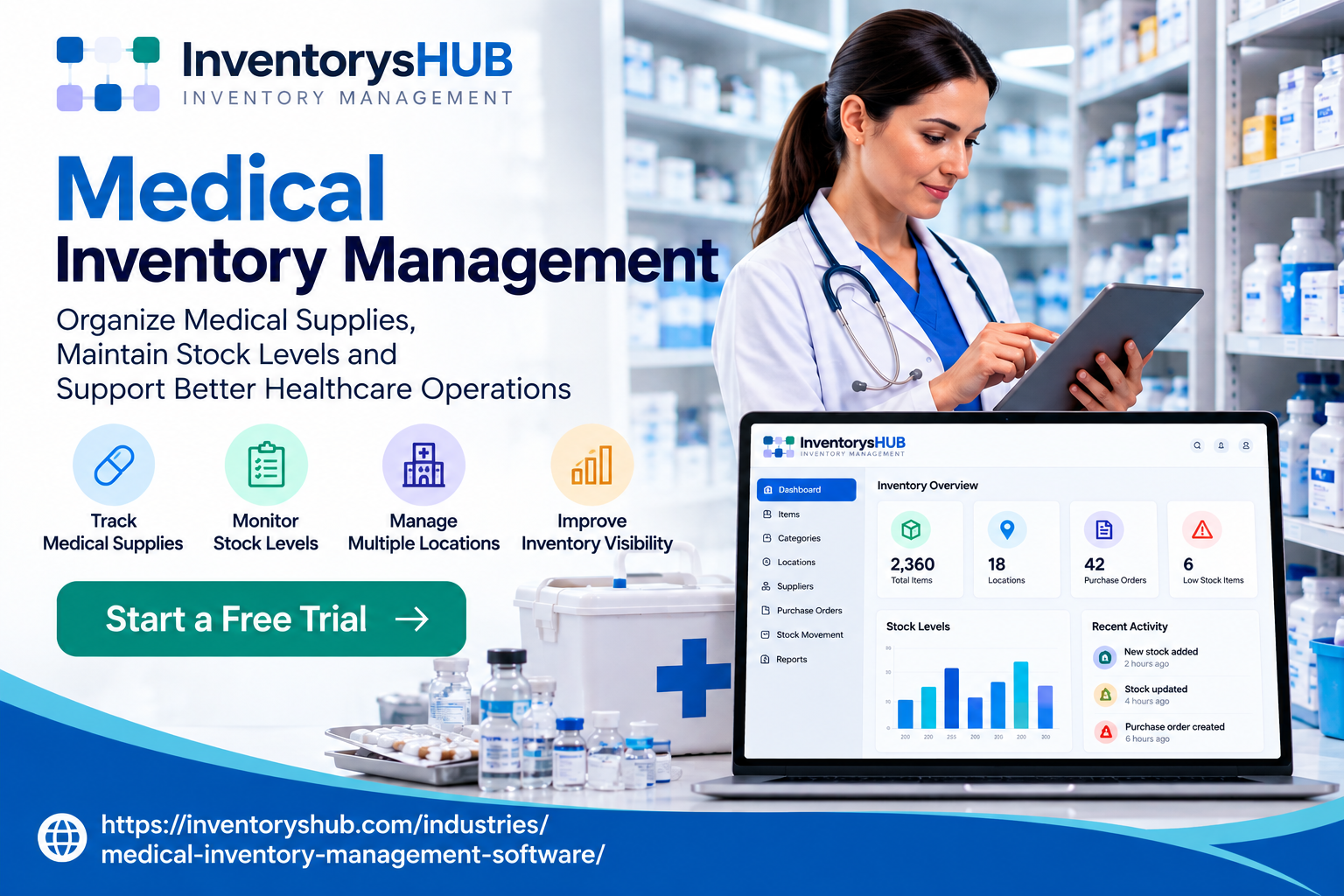
InventorysHUB provides information about inventory management software for healthcare-related needs. Organizations can explore the available solution details and decide whether they align with their operational requirements.
Conclusion
Reducing medical supply waste starts with better visibility and consistent daily practices. Accurate records, sensible purchasing, regular expiration-date checks, organized storage, and routine reviews can help healthcare facilities manage their supplies more effectively.
By making inventory control part of everyday operations, healthcare teams can reduce avoidable waste, make informed replenishment decisions, and maintain a more dependable supply process.
Learn more: https://inventoryshub.com/industries/medical-inventory-management-software/