Description
A property can look perfectly organized on the outside while its everyday operations tell a different story. Maintenance tools may be difficult to locate, spare appliances might sit unused in storage, and employees may not know which supplies are available at another property. These situations are common when businesses grow faster than their inventory processes.
For property managers, the challenge is not simply keeping a list of items. It is making sure the information remains accurate and useful when someone needs to make a decision. A more consistent approach to Real-estate inventory management can help businesses organize their resources and improve visibility across their properties.
When Small Inventory Problems Become Bigger Challenges
Inventory issues do not always begin with a major mistake. Sometimes, an employee moves a piece of equipment but forgets to update its location. A damaged appliance is removed from a unit without being recorded, or a team purchases supplies because nobody can confirm what is already available.
Over time, these small gaps can make inventory records less reliable.
Property managers may then spend additional time checking storage areas, contacting employees, and verifying information before completing routine tasks. This can make simple activities more complicated than they need to be.
The solution starts with recognizing that inventory records are part of everyday property operations, not just administrative paperwork.
Give Every Asset a Clear Record
One of the most useful improvements is creating a consistent way to record the items a business manages.
Depending on the type of asset, the record might include its name, category, location, condition, purchase details, and relevant maintenance information. Businesses do not necessarily need to collect every possible detail. They should focus on information that helps employees identify and manage their resources.
Using consistent item names and categories also makes searching easier. When different teams describe the same equipment in different ways, comparing records can become confusing.
A standard format helps everyone work from a common understanding.
Make Transfers Easier to Follow
Real estate assets frequently move between locations. Furniture may be transferred when a tenant moves out, tools may be shared between maintenance teams, and supplies may be moved to a different storage area.
Whenever a transfer takes place, the relevant inventory information should be updated.
A simple record of the item, previous location, new location, and transfer date can help employees understand where the resource went. It also makes future inventory checks easier because the recorded location is more likely to match reality.
This practice becomes especially valuable for businesses managing multiple buildings or commercial properties.
Think Before Ordering More Supplies
Purchasing decisions become easier when teams have a reliable picture of what is already available.
Before ordering replacement equipment or additional supplies, employees can check existing records and confirm whether suitable items are stored elsewhere. They should also verify the item's condition and whether it meets the intended need.
This does not mean every purchase can be avoided. Some items genuinely need replacing, and certain supplies must be available when required. The objective is to make purchases based on better information rather than uncertainty.
Over time, a consistent checking process can help businesses use their existing resources more effectively.
Connect Inventory Records With Maintenance
Maintenance teams depend on tools, replacement parts, cleaning materials, and other supplies to keep properties operational.
When these resources are difficult to locate, work may take longer to organize. Keeping inventory records updated helps employees identify available supplies and understand where relevant equipment is stored.
Businesses can also document asset condition and maintenance activity where appropriate. This gives property managers more useful information when deciding whether an item needs repair, replacement, or further inspection.
Clear records help connect inventory organization with the practical work happening at each property.
Build Habits That Employees Can Maintain
A process is only useful when employees can follow it consistently. Complicated procedures may be ignored when teams are busy dealing with tenants, repairs, and other responsibilities.
Start with a few straightforward habits:
Record new inventory when items arrive.
Update records whenever assets are moved.
Report missing or damaged items promptly.
Review inventory before placing routine purchase orders.
Assign responsibility for keeping records accurate.
Conduct periodic checks to identify discrepancies.
These habits are easier to maintain when responsibilities are clear and the process fits naturally into existing workflows.
When Is It Time to Consider Software?
Spreadsheets can be a reasonable starting point for businesses with limited inventory and straightforward requirements. However, as the number of properties, assets, and employees increases, keeping information consistent across multiple records can become difficult.
Inventory management software may help businesses organize records and improve access to inventory information, depending on the features available.
Before selecting a platform, consider the number of locations, types of assets, reporting needs, employee access requirements, and how frequently inventory changes.
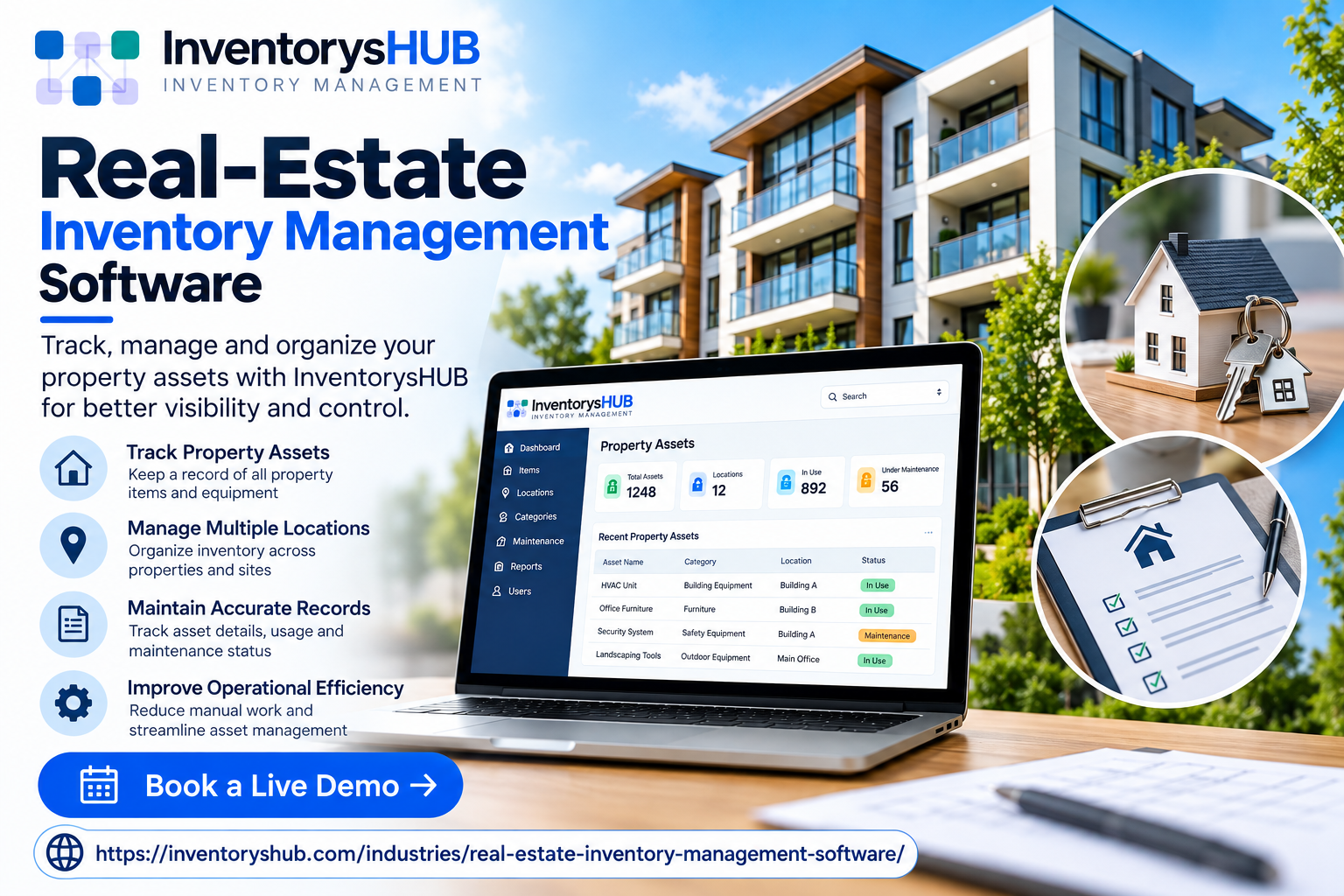
InventorysHUB is one option businesses can explore when evaluating inventory management solutions. Review its available features to determine whether they suit your organization's actual workflows.
Measure Progress Instead of Guessing
Improving inventory management does not require tracking dozens of complicated metrics. A few practical indicators can show whether the process is becoming more reliable.
For example, property managers can review how often inventory records match physical items, how long employees spend locating equipment, and how frequently missing information causes purchasing or maintenance delays.
Regular reviews can reveal recurring problems and help businesses decide which procedures need improvement.
The aim is to make inventory information more useful, not to create extra administrative work.
Final Thoughts
Better real estate operations often come from small improvements that employees can repeat every day. Accurate records, documented asset transfers, regular checks, and thoughtful purchasing decisions can make property resources easier to manage.
As a business expands, these habits provide a stronger foundation for maintaining inventory information across multiple locations. Suitable technology can support the process, but consistency and clear responsibility remain essential.
Businesses looking to improve their inventory processes can explore InventorysHUB and assess whether its available capabilities align with their needs.
#RealEstate #PropertyManagement #AssetManagement #InventoryManagement #PropertyOperations #AssetTracking #RealEstateTechnology #InventorysHUB